
Jesus once fed more than 5,000 people using only five loaves of bread and two fish. With something as amazing as that, you’d be right to think that there are a number of things Jesus’ accomplishes with miracles. Here are a few:
- Jesus’ miracles comfort people who are trapped and oppressed in the world.
- Jesus’ miracles warn those who are too much in love with the world.
- Jesus’ miracles show how God uses ordinary things to accomplish extraordinary ends.
- Jesus’ miracles point to his suffering and exaltation.
I explained all this and read the record of this particular miracle in the sermon I preached last Sunday morning. Give it a listen. It’s about 30 minutes.
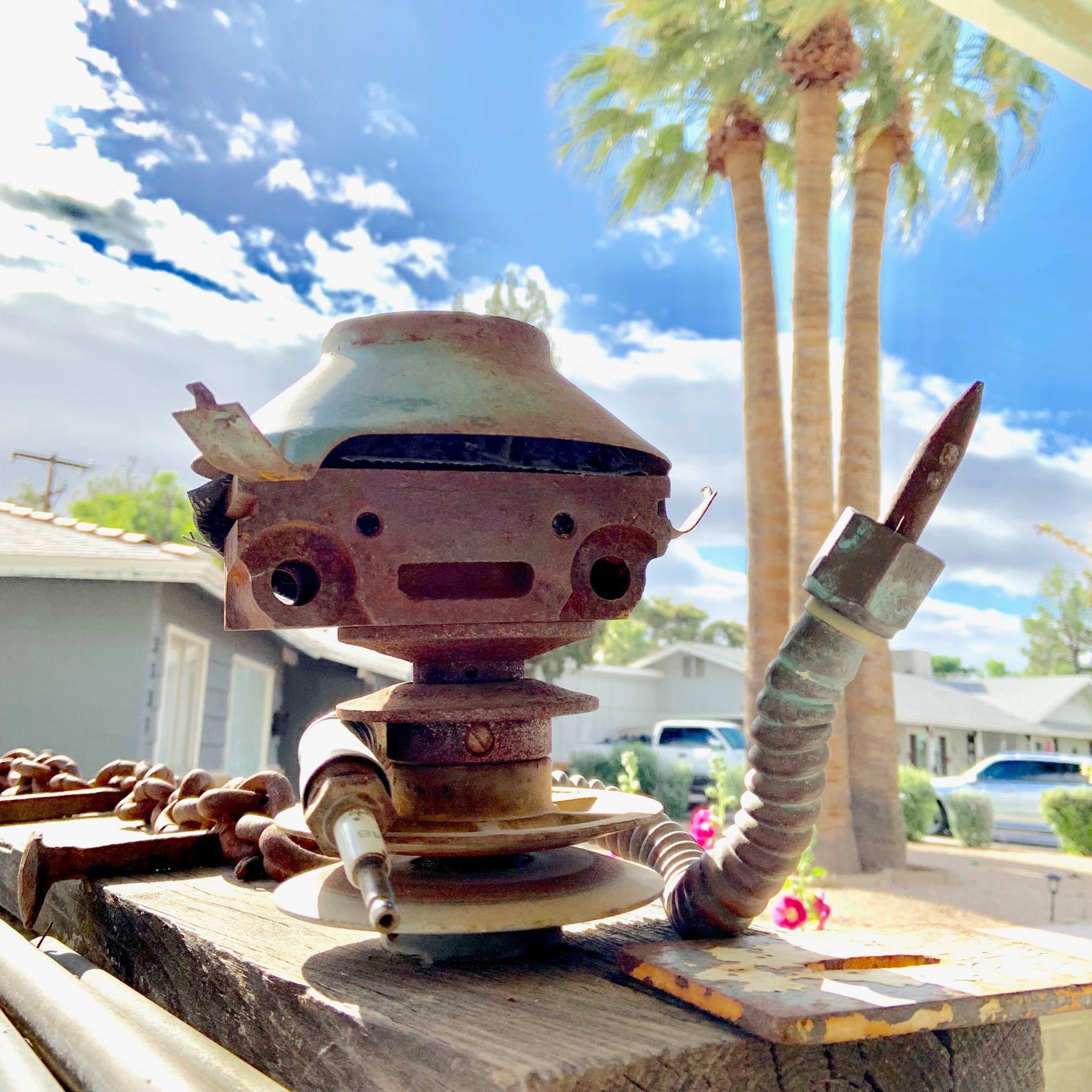
👋 Meet Watchman Wee. He was created by my dad, a meticulous craftsman who always keeps a bit of whimsy close by. I love that about my dad.
👁🗨 It’s the middle of the night. Do you know who your iPhone is talking to? from The Washington Post
Apple promises privacy, but iPhone apps share your data with trackers, ad companies and research firms
Good news: you can limit the tracking.
UPDATE: WSJ published a similar article.
🐌 Loading problems for my website are fixed now. Thanks to the Micro.blog slack community, esp. @mikehaynes for the help.
The beginning of the Nicene Creed refers to God as Father and Almighty.
I believe in one God, the Father Almighty
What do those two names mean to you?
For one, they are ways you can know God. Names are one way God describes himself to us. As Basil, a fourth century church father, pointed out in Against Eunomius:
There is no one name that is adequate to give complete description of God. Rather, there are many names for him, each of which has its own particular meaning…. Taken together they afford us only a small and unclear knowledge of God’s nature, but this is still adequate enough for our purposes.”1
Our purposes are to glorify God and enjoy him forever. His names help us to do that. With his names he comforts us, he humbles us, and he causes us to sing the with the angels:
“Holy, holy, holy, is the Lord God Almighty, who was and is and is to come!” (Rev. 4:8, ESV)
-
Cited in Ancient Christian Doctrine via Accordance. ↩︎
🌱 Inspired by the Johnny Appleseed of hollyhocks, I now have a bag of seeds and am on a mission.

⍟ If you’d like to better understand Jesus’s relationship to the Father, or the Trinity in general, listen to last week’s sermon. Tomorrow, I will preach again from John 5. This time, I’ll teach more about the Spirit.
The Nicene Creed contains core doctrines of the Christian Faith. It puts forth a set of objective truths about the triune nature of God, the work of Christ, the church, and more.
But those truths are framed in a personal way. The creed begins with these important words: I believe (in Latin, it’s Credo, hence “creed”), and it ends with Amen, which comes from Hebrew and means, “it is truly so.” These words that frame the creed are important to me because they remind me that these objective truths from God are also very personal.
I believe in one God, the Father Almighty, Maker of heaven and earth, and of all things visible and invisible. And in one Lord Jesus Christ, the only-begotten Son of God, begotten of the Father before all worlds; God of God, Light of Light, very God of very God; begotten, not made, being of one substance with the Father, by whom all things were made. Who, for us men for our salvation, came down from heaven, and was incarnate by the Holy Spirit of the virgin Mary, and was made man; and was crucified also for us under Pontius Pilate; He suffered and was buried; and the third day He rose again, according to the Scriptures; and ascended into heaven, and sits on the right hand of the Father; and He shall come again, with glory, to judge the quick and the dead; whose kingdom shall have no end. And I believe in the Holy Ghost, the Lord and Giver of Life; who proceeds from the Father and the Son; who with the Father and the Son together is worshipped and glorified; who spoke by the prophets. And I believe one holy catholic and apostolic Church. I acknowledge one baptism for the remission of sins; and I look for the resurrection of the dead, and the life of the world to come. Amen.
When I recite the Nicene Creed, I’m not listing a set of doctrines, I am stating my relationship to those doctrines. It’s the difference between saying trees, and saying I climb trees. And actually, in the case of the creed, it’s more than even that because I’m not primarily professing my faith in the doctrines but in the One who has revealed them.
So when I say, I believe, I’m not reading a grocery list of truths I found in some historical parking lot; I’m confessing what I truly believe and in Whom I truly believe.
This makes the Amen at the end of the creed equally precious to me. It’s the ancient way we say, Yes! I truly mean and agree with what I have said I believe. And, as such, a truly spoken Amen never really ends a confession of faith. The Amen is an exclamation point; it pushes my faith forward by demanding faithfulness.
In other words, if I believe is true, then the rest of what I do ought to conform to the truths I say I believe. Otherwise, I don’t really believe them.
So Lord, may my actions that follow my confession of faith, flow from the faith I confess. Amen.
⍟ How a journalist pretended to be scientist and fooled the media into reporting that chocolate helps people lose weight.