

Charels Spurgeon once lamented how many Christians, especially ministers, don’t get the relationship between the law and gospel right.
“O, when will all professors, and especially all professed ministers of Christ, learn the difference between the law and the gospel? Most of them make a mingle-mangle, and serve out deadly potions to the people…”
But how do you avoid this? That’s a big question, but John Calvin offers some good advice in his comments on 1 John 2:12.
“Holiness of life ought indeed to be urged, the fear of God ought to be carefully enjoined, men ought to be sharply goaded to repentance, newness of life together with its fruits, ought to be commended; but still we ought ever to take heed, lest the doctrine of faith be smothered,— that doctrine which teaches that Christ is the only offer of salvation and all of blessings; on the contrary, such moderation ought to be presented, that faith may ever retain its own primacy. This is the rule prescribed to us by John: having faithfully spoken of good works, lest he should seem to give them more importance than he ought to have done, he careful he calls us back to contemplate the grace of Christ.”
According to Calvin, it’s not enough to preach both the law and the gospel. They must also be proclaimed in right relation to one another.
Understanding what the law and gospel are and how they are related is essential for Christian preaching. Ministers should be expert in them. Here are some things you can read to avoid the mingle-mangle:
- Edward Fisher, The Marrow of Modern Divinity
- Sinclair Ferguson, The Whole Christ
- John Colquhoun, A Treatise on the Law and the Gospel
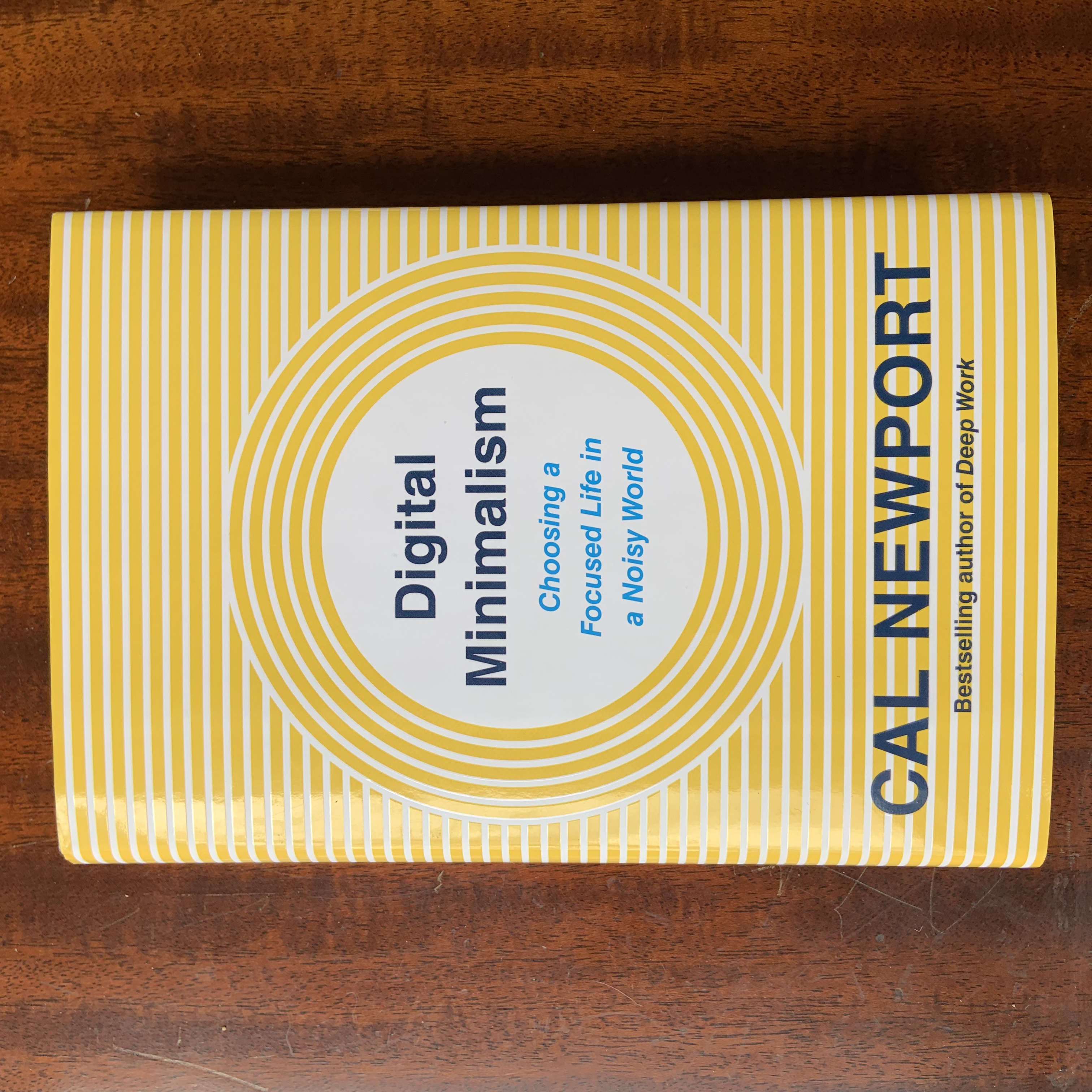
I just wrote a review on Cal Newport’s new book, Digital Minimalism: Choosing a Focused Life in a Noisy World. I’ll either post a link to the review or publish it here in the future.
Bottom line: The only people I know who don’t need to read this book are those who have already adopted his ideas, which is hardly anyone. Do yourself a favor and get this book.
Ti Adelaide Martin specializes in hospitality. She recently opened New Orleans Culinary and Hospitality Institute and was featured in the Wall Street Journal. See: “How to Host a Dinner Like a Pro”
In that feature, she offers some advice. Hospitality requires, she says, “systems, not just smiles.”
“Having that system in place makes it easier for us to be warm and gracious and hospitable, and to connect.”
The Bible tells us to be proactive about hospitality. We need to think about it in advance and be prepared for it. For example, wealthy Christians are commanded in 1 Timothy 6:18 “to be rich in good works, to be generous and ready [or, willing] to share.” And while hospitality is a particular blessing and calling for the wealthy, God says in Romans 12:13 that all Christians must “seek to show hospitality”. We must not neglect it, according to Hebrews 13:2. Seeking is the opposite of neglecting. Seeking is proactive. And interestingly, in Romans, Paul may intend an even stronger verb than seek.
The word that “seek” translates in Romans 12:13 is διώκειν, which usually means to pursue, chase, or drive after something. In some contexts it can mean to prosecute or persecute. This is probably the case when Paul uses διώκειν in the following verse: “Bless those who persecute [διώκοντας] you, bless and do not curse them”. If verse 14 refers to persecuting—and all English versions translate it this way, probably because of Matthew 5—it is a quite a thing to pair this kind of pursuit with the verse before about pursuing hospitality. In that case, Paul would be saying something like, “pursue the goal of showing hospitality, and when others pursue you with the intent to harm you, bless them.” If it doesn’t mean that and instead means, “Bless those who pursue you in showing you hospitality. Don’t curse them!”, then this also strengthens God’s call to be hospitable.
Either way, God tells us to be hospitable and that it’s not good enough to just let hospitality happen. This is because hospitality falls into the broader category of love, as it does in Romans 12. Διώκετε τὴν ἀγάπην—Pursue love—says 1 Corinthians 14:1. Christ’s love for us was proactive, purposeful, and planned. Those who have been born of God will love others in a similar way.
This is why systems are important. Systems for being hospitable make the occasional regular; they ensure that what might be overlooked will be attended to instead. Systems make hospitality easier for the host and a greater blessing for the guest. Of course, each organization, restaurant, church, family, etc., will need to find systems that fit their particular needs and goals, but having those systems they must.
In my church and in my family, we have some good systems in place. But there is room for growth. What about you? What systems do you have in place that make a big difference for you and for those whom you seek to serve?

Idelette was “the best companion of my life”, wrote John Calvin. Her biographers call her “a woman of some force and individuality”. As you might guess, their marriage makes quite a story.

“Hey, guys! I’m at the Tucson Gem and Mineral Show for a few more days!”

If you love typography or the Bible or languages, you’re going to love Dodecaglotta. If you love all three, you better sit down before you click the link.